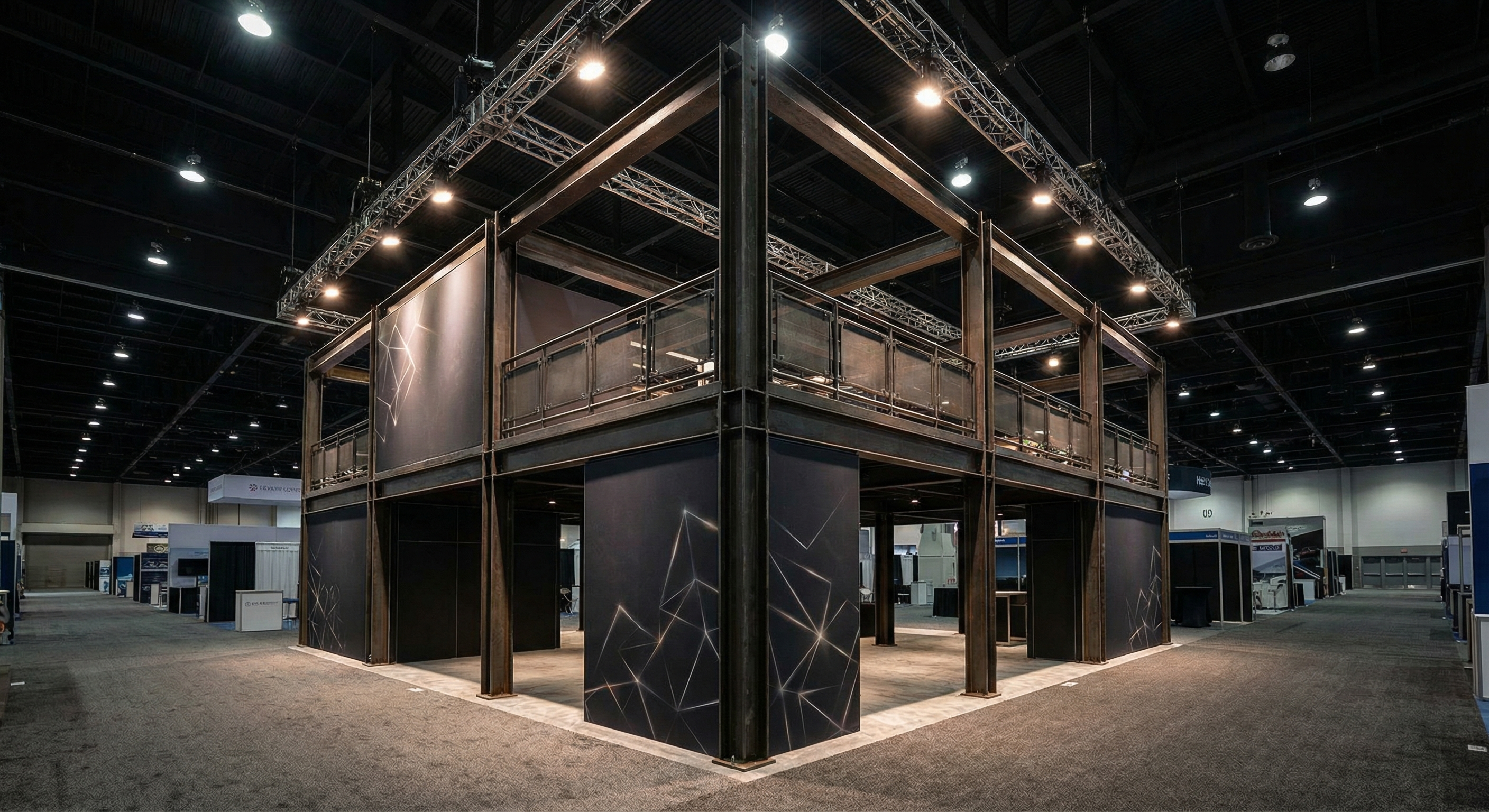
The trade show floor at CES has always been an arms race for attention. But in recent years, the battlefield has shifted vertically. Double-deck exhibits — two-story structures that tower over traditional booth configurations — have become the signature power move for brands determined to dominate the Las Vegas Convention Center's sprawling halls.
According to the Center for Exhibition Industry Research (CEIR), total exhibit space at major U.S. trade shows has grown by just 2.3% annually over the past five years, but the average spend per square foot has surged by nearly 18%. The math is straightforward: when horizontal real estate is capped, the only direction left is up.
The Engineering Behind Going Vertical
Building a two-story exhibit is not simply a matter of stacking one booth on top of another. The structural engineering requirements are significant, governed by both Las Vegas Convention Center venue specifications and local building codes that treat double-deck structures as temporary buildings.
Every double-deck exhibit requires a stamped structural engineering plan, typically specifying steel I-beam frameworks capable of supporting live loads of 100 pounds per square foot on the upper level. The floor system alone — usually a combination of steel decking and composite panels — must account for foot traffic, furniture, product displays, and the occasional crowd gathering for a presentation.
Fire suppression adds another layer of complexity. Most venues require sprinkler systems on both levels, along with dual egress stairways that meet ADA compliance standards. The permitting process alone can take eight to twelve weeks, which means fabrication planning for a January CES show often begins the previous spring.
ROI That Justifies the Investment
Double-deck exhibits are expensive. A well-executed two-story structure typically runs between $250,000 and $1.2 million in fabrication costs alone, before factoring in drayage, installation labor, and venue rigging fees. Yet the brands investing at this level report measurable returns that justify the premium.
The upper deck serves as a controlled hospitality environment — a private meeting space above the noise and chaos of the show floor. For enterprise technology companies closing six- and seven-figure deals at CES, having a quiet, branded space for executive meetings is not a luxury but a strategic necessity. Event Marketer's annual exhibitor trends report found that brands with private meeting spaces at trade shows reported 34% higher lead-to-close conversion rates than those relying on open booth configurations.
A 20-foot structure is visible from nearly every aisle in a convention hall, functioning as a permanent wayfinding landmark — ambient brand exposure that no banner ad can replicate.
The visibility advantage is equally significant. A 20-foot-tall structure is visible from nearly every aisle in a convention hall, functioning as a permanent wayfinding landmark for the duration of the show. That kind of ambient brand exposure is difficult to quantify but impossible to ignore.
Fabrication and Logistics: The Hidden Complexity
The fabrication timeline for a double-deck exhibit typically spans 14 to 20 weeks from design approval to delivery. The structural steel framework is usually fabricated in a dedicated metalworking shop, while the architectural skin — branded panels, LED integration, custom millwork — is produced simultaneously in a separate facility.
Las Vegas-based fabricators like Innovate 3D, which specializes in CNC routing and custom builds for trade show environments, have seen demand for complex structural components surge as double-deck designs incorporate increasingly ambitious architectural elements. Curved walls, cantilevered overhangs, and integrated LED arrays all require precision fabrication that pushes the boundaries of traditional exhibit construction.
Shipping logistics present their own challenges. A typical double-deck exhibit requires 8 to 14 truckloads of freight, compared to 2 to 4 for a standard island booth. Installation crews of 30 or more workers need three to five days of setup time, which means early move-in schedules and premium labor rates.
Venue Restrictions and the Regulatory Landscape
Not every convention center welcomes double-deck exhibits. Height restrictions vary dramatically by venue — the Las Vegas Convention Center permits structures up to 30 feet in most halls, while some regional facilities cap booth heights at 16 feet. The EXHIBITOR planning guide recommends that exhibitors verify height limits, load-bearing capacity, and rigging points at least nine months before show dates.
Insurance requirements add another consideration. Most venues require exhibitors with double-deck structures to carry a minimum of $5 million in general liability coverage, with the venue named as an additional insured. The structural engineer's stamp on the plans serves as the foundation for this coverage, making the engineering review process both a safety requirement and a financial one.
The Future of Vertical Exhibiting
The double-deck trend shows no signs of slowing. As Trade Show News Network reported, CES 2026 featured a record 47 double-deck structures across its four halls — up from 31 in 2024. The technology sector leads adoption, but automotive, healthcare, and consumer goods brands are increasingly following suit.
The next frontier may be even more ambitious. Several major exhibitors are exploring triple-deck configurations and integrated outdoor structures that extend beyond the convention hall walls. Fabrication partners capable of delivering both the precision CNC work and the structural engineering expertise — companies like Innovate 3D — will be essential to turning these concepts into reality.
For brands competing at the highest level of trade show marketing, the message is clear: the show floor is no longer a two-dimensional game. The companies that build up will be the ones that stand out.