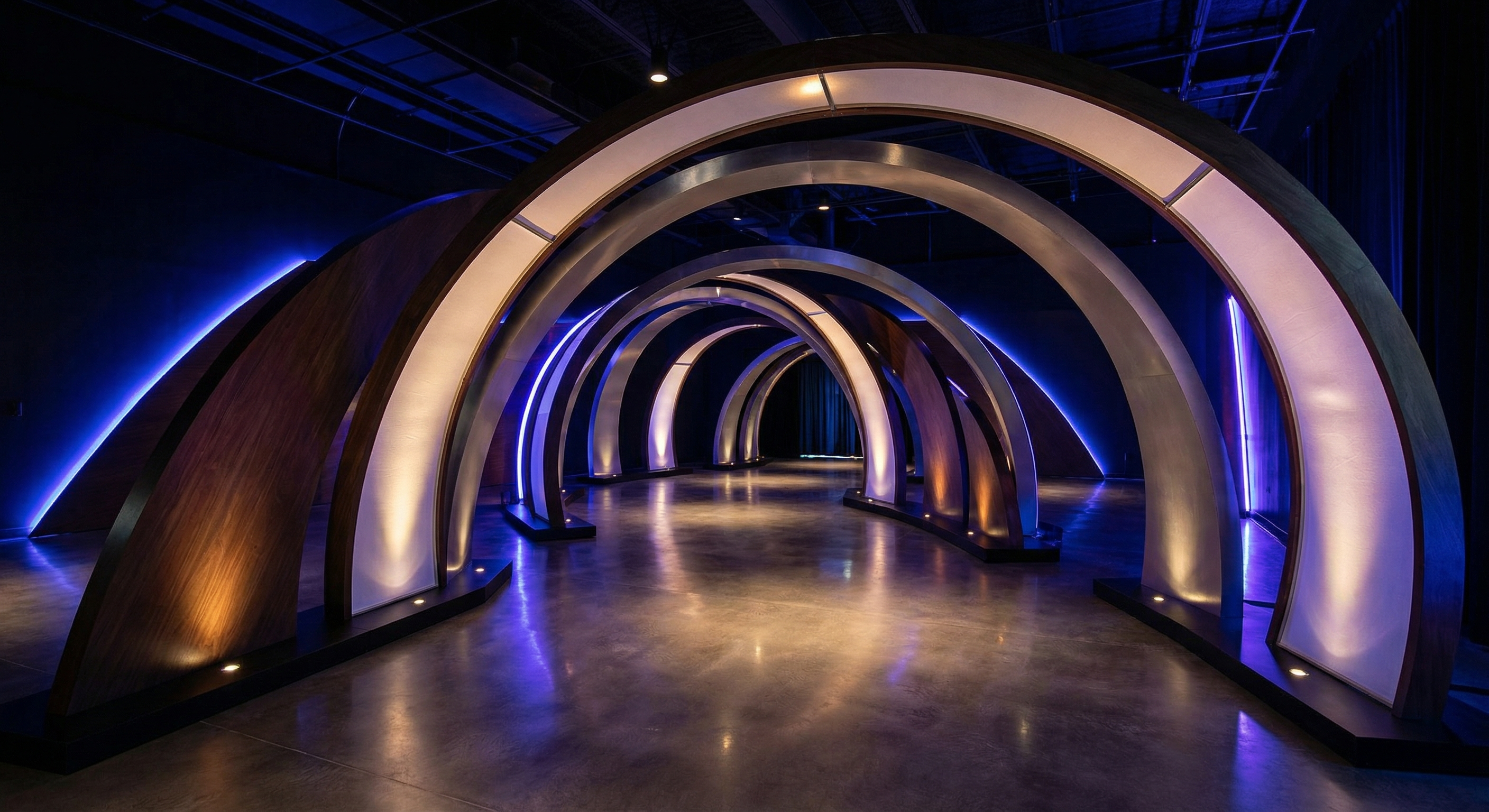
Ten years ago, a brand activation was a sampling table at a music festival. Today, it's a 5,000-square-foot immersive environment with custom fabrication, integrated technology, and a social media strategy designed to generate millions of impressions before the doors even open. The experiential marketing industry has undergone a structural transformation, and the numbers tell the story.
According to Event Marketer's 2025 industry report, U.S. brands spent an estimated $4.2 billion on experiential marketing activations in 2025 — a 67% increase from pre-pandemic levels. The growth is not cyclical recovery. It reflects a fundamental shift in how CMOs allocate marketing budgets, driven by declining digital ad effectiveness and a consumer base that increasingly values physical experiences over screen-based messaging.
What's Driving the Investment Surge
The economics of digital advertising have deteriorated steadily for brands over the past decade. Average cost-per-click rates on major platforms have increased by 15-20% annually, while ad engagement rates have declined. The Interactive Advertising Bureau's 2025 digital ad report noted that banner ad click-through rates have fallen below 0.1% — meaning brands pay to show ads that 999 out of 1,000 people ignore entirely.
Experiential marketing offers a fundamentally different value proposition. A well-designed brand activation creates a direct, memorable interaction between consumer and brand in a controlled environment. The conversion mechanics are different from digital: rather than competing for a fraction of a second of attention in a social media feed, activations create multi-minute engagements that drive both emotional connection and measurable purchase intent.
Research from the Freeman Company's brand experience research found that 91% of consumers report more positive feelings about brands after attending activations, and 85% are more likely to purchase. Those numbers dwarf the impact metrics of any digital advertising format.
The Fabrication Backbone of Modern Activations
The physical environments that make brand activations work don't build themselves. Behind every Instagram-worthy brand moment is a fabrication team that translated a creative concept into a physical reality — often under aggressive timelines and exacting brand standards.
Modern activation fabrication is a multi-discipline operation. A single project might require CNC-routed architectural elements, custom metalwork, LED integration, scenic painting, and structural engineering — all coordinated to arrive on-site within a narrow installation window. Full-service fabrication partners like Innovate 3D have become critical to the activation ecosystem, offering the CNC routing, foam carving, and custom build capabilities that agencies need to execute increasingly ambitious concepts.
The fabrication complexity has escalated alongside budgets. Where a 2016-era activation might have featured printed vinyl on rented framework, a 2026 activation demands fully custom three-dimensional environments with no visible seams.
The fabrication complexity has escalated alongside budgets. Where a 2016-era activation might have featured printed vinyl graphics on rented framework, a 2026 activation demands fully custom three-dimensional environments with no visible seams, reconfigurable elements for multi-city tours, and materials that withstand weeks of continuous public interaction.
The Rise of the Multi-City Tour
One of the biggest structural shifts in the activation market has been the move from one-off events to multi-city touring activations. Brands are amortizing their fabrication investment across 10, 20, or even 50 tour stops, transforming what was once a single-event expense into a cost-per-impression model that rivals digital efficiency.
Touring introduces unique fabrication requirements. Elements must be designed for rapid assembly and disassembly — ideally under four hours for setup and two hours for strike. Materials must survive repeated handling, truck loading, and climate variations from Miami humidity to Denver altitude. The Trade Show News Network's experiential trends analysis reports that touring activations now account for nearly 40% of total activation spend, up from 15% in 2020.
This touring model has also changed the fabrication bidding process. Agencies now evaluate fabrication partners not just on build quality and price but on their ability to produce elements that will survive six months on the road. The specification requirements read more like industrial product engineering than traditional scenic fabrication.
Technology Integration and the New Activation Stack
The most successful modern activations blend physical fabrication with technology in ways that were impractical or impossible five years ago. RFID-triggered experiences, projection mapping on custom-fabricated surfaces, augmented reality overlays tied to physical objects, and real-time social media walls are all standard elements in the contemporary activation toolkit.
This technology layer adds complexity to the fabrication process. CNC-routed panels may need to accommodate embedded sensors or projection surfaces with specific reflectivity requirements. Structural elements must route cabling and power without visible wire management. The fabrication partner must understand not just how to build the physical structure but how it will interact with the technology stack — a capability that distinguishes advanced fabrication shops like Innovate 3D's custom build services from basic scenic houses.
What Comes Next
The brand activation market shows no signs of peaking. As CEIR's latest industry forecast projects continued growth in experiential marketing spend through 2028, the implications for the fabrication sector are significant. More activations mean more demand for skilled fabricators, advanced CNC equipment, and project management capabilities that can handle the complexity of modern experiential builds.
The brands that are winning in this space understand that the physical environment is not just a backdrop — it is the experience. And the fabrication partners who can deliver those environments reliably, on time, and on budget are becoming some of the most in-demand players in the marketing supply chain. In an industry built on creating moments people remember, the craft of building those moments has never mattered more.